How to Minimize Light Pollution With Outdoor Floodlights

Time:2026-09-26 Author:Sophia
0%

Outdoor floodlights improve visibility around doors, paths, and driveways, but poorly aimed beams can brighten windows, trees, and the night sky. That wasted light can disturb neighbors and obscure stars. More brightness is not always better.

Learning how to minimize light pollution with outdoor floodlights starts with choosing only the light you need. Look for fixtures with shields that direct the beam downward, and aim them at the ground rather than across a yard. A warm-white lamp, often around 2700K to 3000K, can feel less harsh than a cool, blue-rich one. Match the output to the area; a small entrance rarely needs the same power as a broad driveway. Check the product specifications, too.

Then control when the light runs. A motion sensor or timer can keep a fixture off when nobody needs it. Walk the area after dark and look for bright patches beyond the intended target. A beam that seems contained from a ladder may spill into a bedroom from across the yard. Small adjustments matter.

There is no universal setting. Trees, walls, and seasonal growth change how light travels, so check again after installation. I would not assume a shield solves everything; it may still leave glare at certain angles. Use enough light for a clear view, then reduce it until the space remains practical without lighting the whole night.
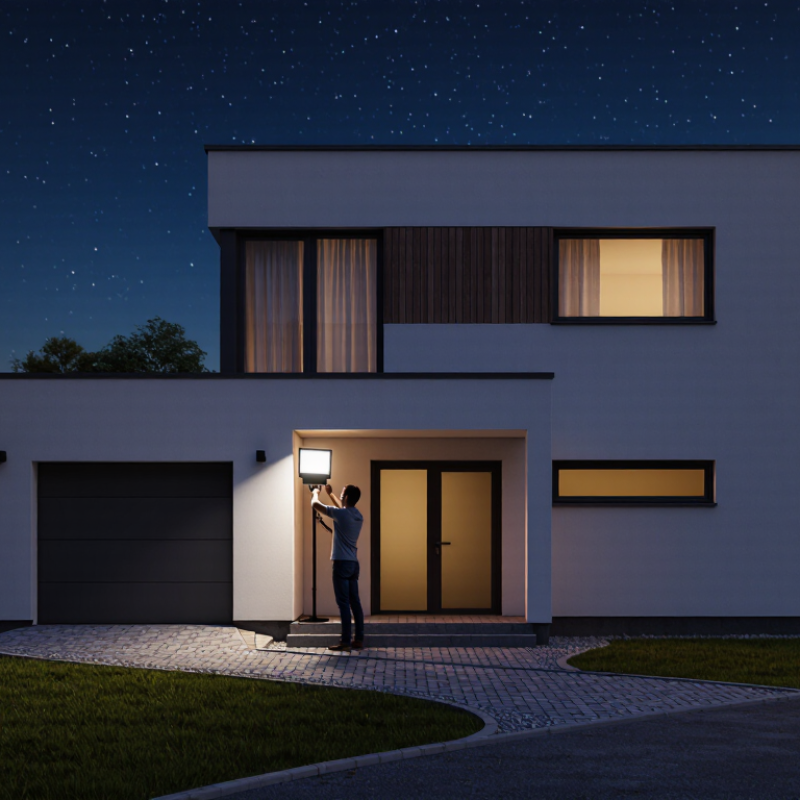
How to Minimize Light Pollution With Outdoor Floodlights

Assess the Site and Identify Only the Areas That Need Lighting

Walk the property after dark before selecting floodlight locations. Note the exact tasks: unlocking a side door, using three porch steps, or crossing a short path. Mark those spots on a simple sketch. A wide beam may seem convenient, but it can spill across bedroom windows, tree canopies, and neighboring yards. Check existing porch lights and street lighting, too; duplicate coverage often adds glare without improving visibility.

A 2017 Science Advances study by Kyba and colleagues found that artificially lit outdoor areas grew by about 2.2% per year from 2012 to 2016. That global trend cannot predict one home’s impact, but it supports checking the site before adding fixtures. Be precise. Stand at each task area and note whether shadows hide a step or a lock. Then view the property from the sidewalk and nearby windows. I have found that a light that looks contained from beneath it can still shine into a room.

A quick test helps: temporarily cover part of the lens, or use a portable light, and compare the beam. Record which areas truly need illumination, and leave the rest unlit.

Choose Shielded Floodlights With an IES TM-15 U0 Uplight Rating

Outdoor floodlights can brighten a path without sending light into the night sky. Look for a shielded fixture with an IES TM-15 BUG rating of U0 for uplight. U0 means the fixture’s tested light distribution has no direct output in the uplight zone. It does not mean the whole property produces zero skyglow.

Check the photometric file. Confirm it matches the fixture, optics, and mounting position you plan to use; ratings can change with configuration. A shield or visor can keep light off bedroom windows and tree canopies, while careful aiming keeps the beam on a driveway or gate. Mount the light only as high as needed, and choose enough output for the task rather than the brightest option available.

Small changes matter. A pale wall or concrete path can reflect light upward, even when the fixture is U0. That detail is easy to overlook.

After installation, check the area from the sidewalk and from nearby windows. If the beam spills past the target, adjust its angle or reduce its output. A U0 rating is a useful starting point, not a substitute for checking the light on site.

Select Lamps at 3,000 K or Below, Following DarkSky Guidance

Outdoor floodlights can make a driveway safer to navigate, but their color temperature matters. DarkSky’s outdoor-lighting guidance recommends choosing lamps at 3,000 K or below. This warmer light generally contains less short-wavelength blue light than cooler lamps, which can contribute to skyglow and disturb views of the night sky.

The scale of the issue is substantial: a 2016 study in Science Advances, “The New World Atlas of Artificial Night Sky Brightness,” estimated that more than 80% of the world’s population lives under light-polluted skies.

Check the product label before buying; “warm white” alone does not confirm a specific color temperature. A lamp rated 2,700 K or 3,000 K is a practical starting point. Still, warmer light is not automatically well-controlled. A low-mounted floodlight aimed across a fence can shine into a bedroom window, even at 2,700 K.

Use a shielded fixture, point it only at the surface that needs illumination, and add a timer or motion sensor where suitable.

The American Medical Association’s 2016 report on outdoor lighting also advised using 3,000 K or lower for new, unshielded LED street lighting. That recommendation concerns street lighting, not every residential fixture, but it supports the value of limiting blue-rich outdoor light.

Color temperature is only one part of the decision; brightness and aim matter too. It is easy to overlook a neighbor’s window while testing a beam from the driveway. Check the view from the property line after dark.

Aim Beams Below the Horizon and Keep Light on the Target Area

Outdoor floodlights can brighten a driveway without washing the whole street in light. Set each fixture so its beam points downward, below the horizon. The lit area should be visible from the fixture, not floating across a neighbor’s windows or the night sky. Keep it focused.

A useful check is to stand near the light after dark and look toward the area it serves. If the bright source shines directly into your eyes, tilt it lower or adjust its position. Aim for the steps, gate, or parking space—not the tree canopy above them. A shield or hood can help block light escaping from the sides. Small adjustments matter.

Floodlights often look well aimed during the day, but nighttime reveals stray glare. I’ve found it easy to mistake “bright” for “useful”; it isn’t always. Try lighting only the target area, then walk around its edges to see where the beam spills. If light reaches a bedroom window or travels far beyond the path, reposition the fixture. A motion sensor or shorter timer can reduce how long the beam stays on, though it won’t correct a poorly aimed light. Check the angle again after moving the fixture.

Use Timers, Motion Sensors, and Dimming to Limit Operating Hours

Outdoor floodlights often stay on after the work is done. A timer gives each fixture a clear shutoff time. Set it around the hours people use a walkway, driveway, or entrance, then review the schedule after a week. Sunset shifts through the seasons, so a fixed setting may leave a yard bright later than intended. Easy to overlook.

Motion sensors can keep lights off until someone approaches. Aim them toward the path or doorway, not a busy street where passing cars may trigger them. Adjust the detection range and test it from several angles. A short-on duration works for quick trips outside, but it should allow enough time to reach steps or unlock a door safely. Small adjustments matter.

Dimming offers a gentler option when full brightness is unnecessary. A light can remain at a low level and brighten briefly when motion is detected, reducing glare and spill onto nearby windows. Try a lower setting, then check the area from the sidewalk and from inside the house. The ideal brightness is not always obvious from beneath the fixture. If shadows make a step hard to see, raise the level slightly or change the fixture’s aim.

FAQS

What color temperature should I choose for an outdoor floodlight?

Choose 3,000 K or lower. A 2,700 K lamp is a practical starting point. Check the label; “warm white” alone is not specific enough.

Does warmer light prevent light spill?

No. It generally contains less short-wavelength blue light, but it can still shine into a bedroom window. Aim and shielding matter.

How should I aim a floodlight?

Point it only at the driveway, path, or entrance that needs light. Check the beam from the property line after dark. It is easy to miss a neighbor’s window from the driveway.

Can a timer help reduce outdoor lighting?

Yes. Set it for the hours people use the walkway or entrance, then review it after a week. Sunset shifts with the seasons.

Where should I point a motion sensor?

Aim it toward a path or doorway, not a busy street. Passing cars may trigger it. Small adjustments help.

How long should a motion-activated light stay on?

Give people enough time to reach the steps or unlock the door. Test it yourself; a setting that seems fine may shut off too soon.

Is dimming useful for floodlights?

A low setting can provide basic light, with a brief increase when motion is detected. Check for dark steps from the sidewalk. Raise the level slightly if needed.

Does color temperature determine whether a light is well controlled?

No. Brightness, direction, shielding, and operating hours matter too. I can still misjudge the beam while standing beneath the fixture.

Why limit unnecessary outdoor light?

Excess light can contribute to skyglow and disturb views of the night sky. A 2016 study estimated that over 80% of the world’s population lives under light-polluted skies.

Conclusion

How to minimize light pollution with outdoor floodlights begins with careful planning. Assess the property after dark and identify only the places that genuinely need illumination, such as entrances, paths, or work areas. Choose fully shielded fixtures that direct light downward and have an IES TM-15 U0 uplight rating, which indicates no upward light output. Use lamps rated at 3,000 K or lower to keep the light warmer and reduce unnecessary glare and sky glow.

Aim each beam below the horizon and keep it focused on its intended target rather than neighboring properties or open space. Then use timers, motion sensors, or dimming controls to ensure lights operate only when needed and at an appropriate brightness. Together, these steps can improve visibility while avoiding excessive lighting and helping preserve the natural darkness of the night sky.

Sophia

Sophia

Sophia is a dedicated marketing professional with an exceptional depth of knowledge about her company's products and services. With a keen understanding of market trends and customer needs, she crafts insightful blog posts that not only inform but also engage readers, enriching the company’s online......